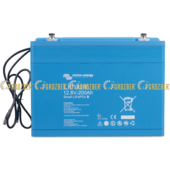
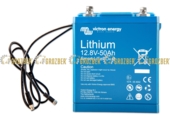
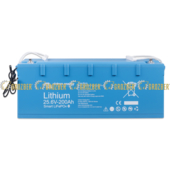
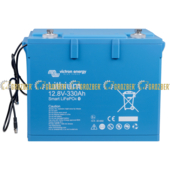
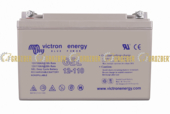
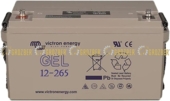
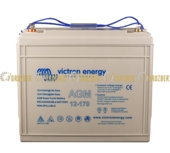
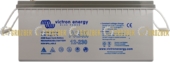
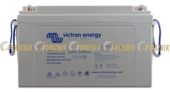
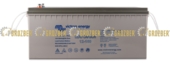
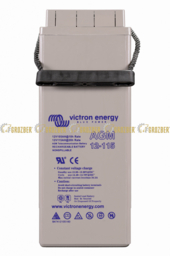
Gel, multi-gel and AGM accumulators - briefly about all.
For the first time, faced with the choice of battery for uninterrupted power supply, anything, whether it is office, house, boiler room or production, our customers are faced with the fact that in the classification of even such a simple thing manufacturers were able to bring significant confusion.
This raises many questions, for example:
Which battery is better: lead-acid or gel?
How is the multigel battery different from gel?
What is AGM VRLA?
For the convenience of searching in our online store, we designate the batteries the way the manufacturer labels them - so that you can easily find the right model. But if you have not yet decided on a particular model and just trying to understand: what battery pack for uninterrupted power supply better buy you this material will help.
TYPES OF BATTERIES FOR UPS AND TIMING
First of all, you need to remember that all batteries produced so far by industry for UPS are lead-acid.
Another "scary" abbreviations - VRLA and SLA - both refer to batteries that are used in UPS. Also such batteries are called maintenance-free and sealed.
VRLA stands for the Valve Regulated Lead Acid, which means that the valves are valve-controlled lead-acid.
SLA means Sealed Lead Acid, that is closed (sealed) lead-acid.
But maintenance-free - means that in the battery of this kind do not need to monitor the level of electrolyte and refill water, as, for example, in automobiles. The designation is sealed (hermetically sealed) indicating that the electrolyte will not flow out of the battery of this type, even if it is tilted to the side or shakes. Leak-tightness also allows them to operate in residential areas: the combustible fumes released during the battery operation remain "locked" inside, and only in the event of disruption of working conditions can the emergency valve open.
And all these definitions are not different types of batteries, but the same: VRLA/SLA sealed (hermetic), not maintenance. This is the type that is most common in uninterrupted power supplies, and it is the batteries that we sell in our Internet hypermarket.
GEL and AGM In order to achieve tightness and eliminate the need for battery maintenance for UPS, manufacturers use two different technologies: GEL (Gelled Electrolite) and AGM (Absorptive Glass Mat). Both technologies provide gas recombination to preserve the volume of the electrolyte and to "bind" it to avoid spillage. In gel accumulators, the liquid electrolyte is brought to a gelatinous bonding consistency by adding silicon compounds to it. As a result, the electrolyte does not splash out during shaking, and does not flow out in case of minor damage to the body. This technology appeared first, which is why many old-fashioned all sealed maintenance-free batteries are called gel.
Household name "helium batteries", fundamentally wrong. Helium gas has nothing to do with batteries.Due to the astringent state of gel batteries, gases recombine: As a result of chemical reaction, water in the battery decays to hydrogen and oxygen. Hydrogen and oxygen ions remain in the enclosed space of the battery and, moving microscopes and cracks in the gel, join and form water again. Water is absorbed by the gel, the initial electrolyte volume is restored. As a result, we have a battery that does not need to refill water, because it practically does not evaporate. In addition, there is no gas separation during the reaction, so the battery can be used in residential areas.
In AGM batteries, the space between the plates is filled with fiberglass mats that absorb the electrolyte.
In the photo - an open AGM battery, in which you can consider "Glass Mat" - fiberglass mats. This achieves almost the same goals as the gel: the electrolyte does not spill out and the filler pores recombine gases, that is, we have the same sealed battery, which is not maintained, as the gel. Except that when the body is damaged, the electrolyte is likely to leak and damage nearby equipment.
That is why in expensive telecommunication systems, residential buildings, offices and manufacturing often prefer to use a battery pack type GEL VRLA. AGM technology is newer than GEL. Please note that: GEL and AGM batteries are lead-acid. These are two different technologies.
HOW DO YOU DO MULTIMETERS?
Multigel batteries are not essentially a separate type of power supply. Most often manufacturers and retailers use this name for marketing purposes and for AGM batteries.
As an option you can simply read all the information on the label and most likely the manufacturer of the label "MG" in the name will decode on the battery itself indicating that it is: "Technology: AGM, maintenance-free battery". And given that the price of multigel batteries is always lower than gel, and this is despite the fact that the gel technology is quite expensive - in the vast majority of cases we are dealing with AGM.
Differences between gel and AGM batteries.
| Показатель
|
Gel
|
AGM
|
| Сycle life
|
2-3 times higher than that of AGM (about 600 cycles) due to the viscous electrolyte. The plates remain coated with it during deep discharge, so are less susceptible to corrosion.
|
About 300 charge-discharge cycles.
|
| Сharge
|
Very demanding to the accuracy of the charge, its excess can lead to inflating the battery.
|
It is not so critical to charge, although an excess charge voltage can also cause battery boiling and swelling.
|
| Self-discharge
|
The self-discharge value is small, therefore suitable for use where discharge occurs by small currents for a long period of time.
|
Self-discharge is more intense than gel.
|
| Overheating
|
Overheating can cause battery explosion.
|
Overheating is not so critical, but is also dangerous.
|
| Deep discharge
|
Good withstand deep discharge.
|
Desired operation at discharge depth not more than 30%.
|
| Starting and maximum current
|
Cannot give large current values, especially starting ones, due to high internal resistance.
|
Starting currents are larger.
|
| Short Circuit
|
Very sensitive to short circuits.
|
Less sensitive.
|
| Еxploitation
|
In any position other than "upside down", small damage to the shell does not cause electrolyte to leak due to the viscosity of the electrolyte.
|
In any position except "upside down".
|
So, in general, gel batteries will last longer than AGM in systems: where discharge-charge cycle occurs more often, where deep discharge is allowed, where discharge takes a long time, where electrolyte flow can be critical in case of accidental damage to the housing. And most importantly, be sure to pay attention to the specifications of a particular model, declared by the manufacturer, they may differ significantly for batteries of different brands and price categories.